
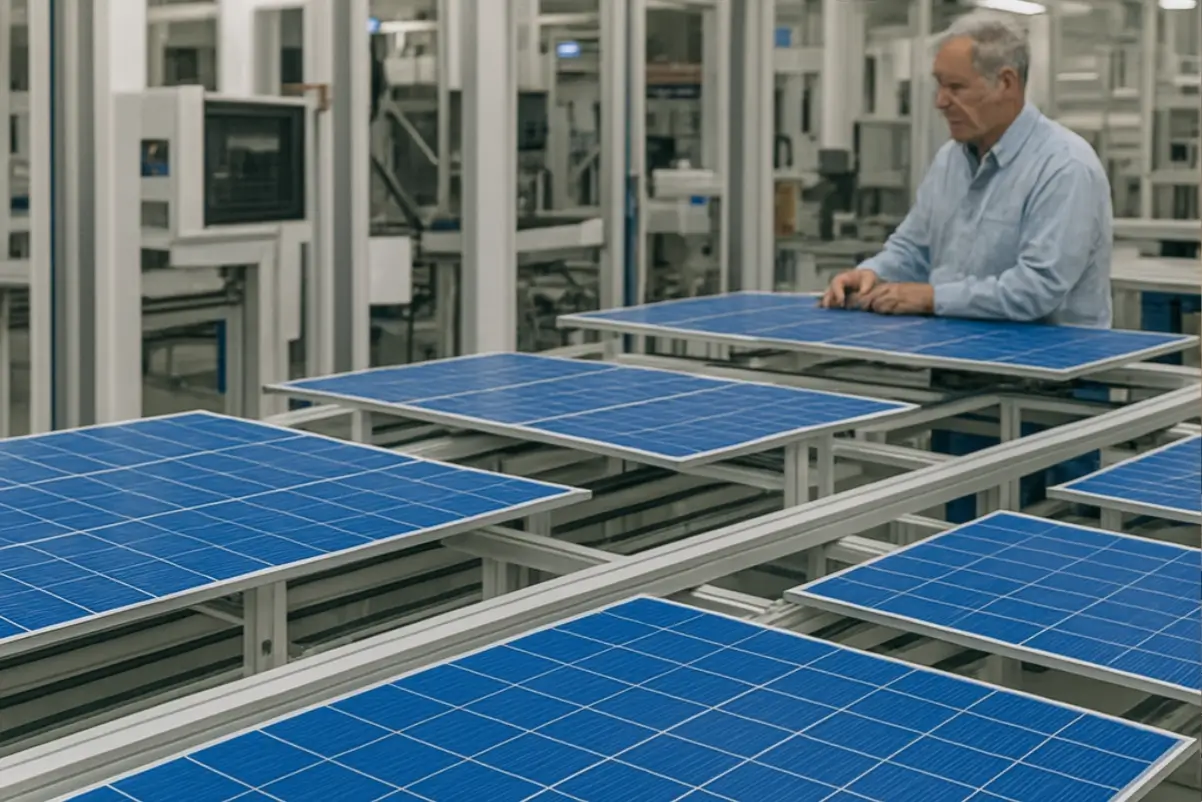
With solar installations booming, experts urge a shift from imports to domestic manufacturing
The UK solar energy sector is witnessing unprecedented growth. Close to 1.8 million homes are now equipped with rooftop photovoltaic (PV) systems, and the government has set an ambitious goal of reaching 47 gigawatts of solar capacity by 2030.
However, behind the scenes of this success lies a growing concern: 97 percent of the solar panels used in the UK are imported, mostly from Asia. Industry leaders are now calling for an urgent shift towards homegrown solar manufacturing to reduce dependency, strengthen energy security, and boost local green jobs.
Why Domestic Manufacturing Matters
The UK has made great strides in clean energy adoption, but its solar supply chain remains heavily reliant on foreign production. This dependence makes the sector vulnerable to price shocks, shipping delays, and global supply disruptions – factors that became especially clear during recent geopolitical tensions and pandemic-era shortages.
Transitioning to domestic production would not only reduce risk but also lower carbon emissions linked to shipping and create thousands of skilled manufacturing jobs across the country.
According to the UK Solar Alliance, building a domestic supply chain could also cut project costs in the long term and help meet climate targets faster.
Spotlight on Oxford PV
One of the most promising innovations in this space comes from Oxford PV, a UK-based company developing tandem solar cells with record-breaking efficiency of 26.9 percent.
These tandem cells combine silicon with a perovskite layer to capture more sunlight than conventional panels. Oxford PV’s technology could revolutionise the industry, providing higher output panels that perform better in the UK’s often cloudy climate.
If scaled effectively, Oxford PV and similar innovators could lead a new era of British solar manufacturing, supplying panels not only for domestic use but also for export across Europe and beyond.
The Role of Policy
Experts agree that industry growth must be matched with strong government support. Proposals include:
- Grants and tax relief for solar manufacturing startups
- Public investment in pilot production lines
- Green procurement rules favouring UK-made panels for public projects
- A clear solar industrial strategy to attract private capital and reduce risk
The Clean Energy Industries Sector Plan, launched earlier this year, promises new investment in UK supply chains. Whether solar will receive a central focus remains to be seen.
At Greenoverse CIC, we believe the solar revolution must be not only widespread but also locally powered. Our work aims to connect households, businesses, and communities with affordable clean energy solutions ideally sourced from British innovation.

Comments are closed